Habits
Why I'm Losing Inches But Not Weight: Body Recomposition
Stuck at the same weight but clothes fit better? Learn why the scale lies during body recomposition, what measurements really matter, and how to track real progress.
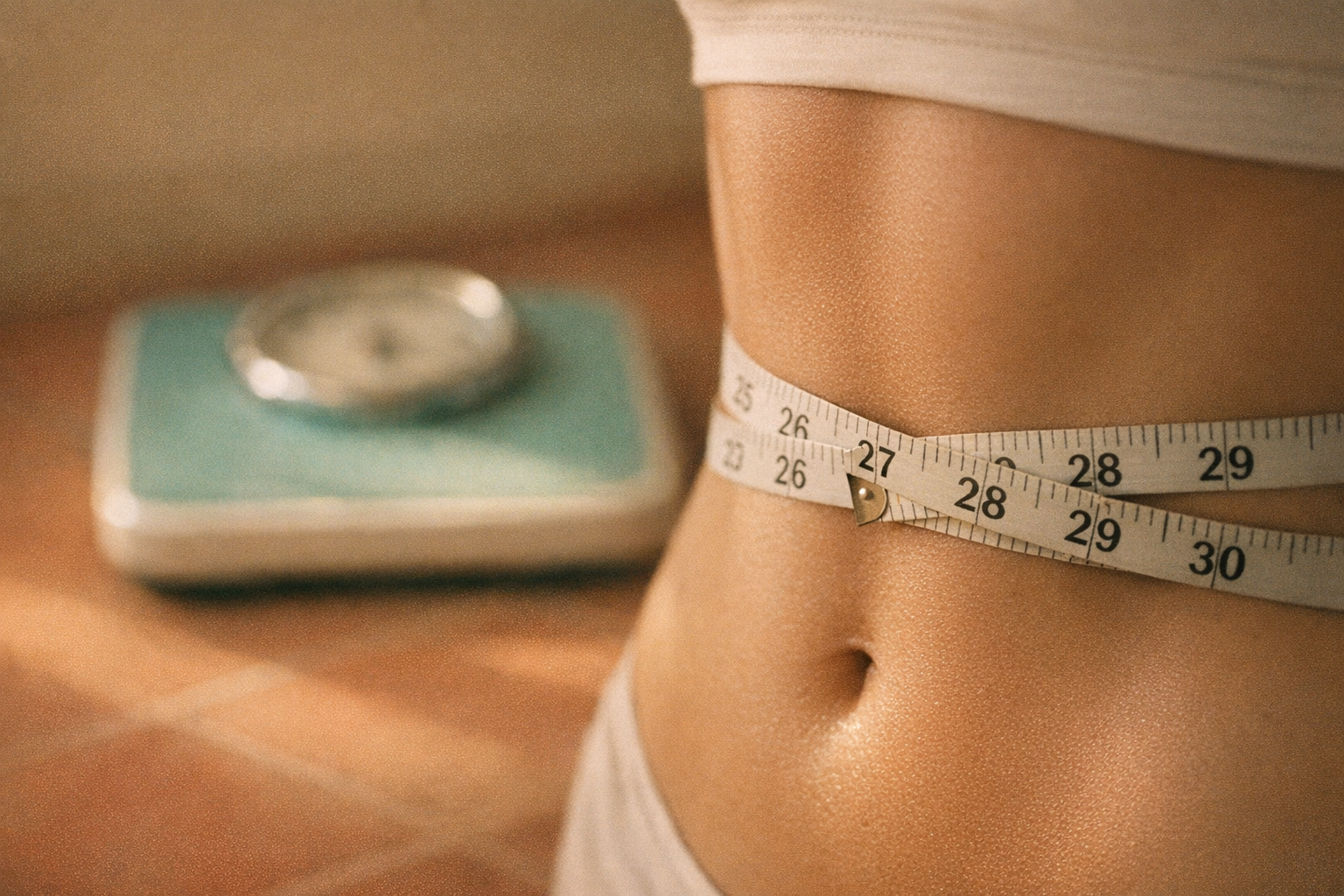
When the Scale Becomes Your Enemy
You’ve been consistent for weeks. Your jeans slide on easier. Your shirt sits differently across your shoulders. Friends ask if you’ve lost weight. But when you step on the scale? The number hasn’t budged. Or worse—it went up.
This contradiction breaks people. I’ve watched dozens of conversations in weight loss communities where someone posts progress photos showing visible changes, side-by-side comparisons that clearly show a transformed physique, yet they’re devastated because the scale shows the same number—or even a few pounds higher. The replies flood in: “You look amazing, forget the scale!” But it doesn’t help. When you’ve been conditioned to measure success by a single number, seeing it refuse to drop feels like failure.
The truth? You’re not failing. You’re experiencing something far more valuable than simple weight loss: body recomposition. And the scale is the worst tool to measure it.
What’s Actually Happening Inside Your Body
Body recomposition isn’t some mystical process—it’s basic biology that gets overlooked in our obsession with pounds. When you start strength training while eating adequate protein and maintaining a modest caloric deficit, two things happen simultaneously: you lose fat and build muscle. Sometimes at nearly the same rate.
Muscle tissue is denser than fat. A pound of muscle takes up about 20% less space than a pound of fat. So you can literally shrink in size while the scale stays put. Your body is trading bulky fat for compact, metabolically active muscle tissue. The scale sees “155 pounds” both times. Your waistline knows better.
This particularly frustrates people who’ve added strength training to their routine. You’re doing everything right—lifting weights two or three times a week, hitting protein goals around 0.8-1g per pound of body weight, getting enough sleep for recovery. The mirror and your clothes tell you it’s working. The scale calls you a liar.
One woman I know took measurements and progress photos every two weeks while her weight stayed within a three-pound range for six weeks straight. Her waist dropped two inches. Her hips lost an inch and a half. Her arms got more defined. But she almost quit because the scale “wasn’t moving.” She was losing fat while building the exact muscle that would help her keep it off long-term. The scale couldn’t tell that story.
Why BMI and Weight Charts Miss the Point
The medical establishment still relies heavily on BMI—a formula that divides your weight by your height squared. It was never designed for individual health assessment. It was created in the 1830s by a Belgian mathematician studying population statistics. Not metabolism. Not body composition. Just a quick way to categorize large groups of people.
BMI calls muscular athletes “overweight.” It labels people with low muscle mass as “healthy” even if their body fat percentage is high. It completely ignores where your weight comes from. A person with substantial muscle mass and a BMI of 27 might be far healthier than someone with a BMI of 23 who has high body fat and low muscle.
The obsession with reaching a specific number on the scale often leads people down destructive paths. They cut calories aggressively, lose both fat and muscle, hit their “goal weight” and look worse than when they started—what bodybuilders call “skinny fat.” The scale shows success. The mirror shows the opposite.
What to Measure Instead
If the scale lies during body recomposition, what tells the truth? Several things, and tracking all of them gives you a complete picture.
Measurements with a tape measure. Take them every two weeks, same day of the week, same time of morning before eating. The key spots: waist at the narrowest point, hips at the widest point, thighs mid-way between knee and hip, arms relaxed at mid-bicep. Write down the numbers. When your waist drops an inch while the scale stays flat, that’s fat loss. When your arms or thighs maintain size or grow slightly while eating in a deficit, that’s muscle you’re keeping or building.
Progress photos. Take them weekly in the same spot, same lighting, same clothing (or none). Front, side, back. Most people can’t see their own gradual changes in the mirror day-to-day. But put a photo from week one next to week eight? The difference becomes undeniable. The scale might show three pounds down. The photos show a complete body transformation.
How your clothes fit. This one’s less scientific but incredibly accurate. When you can button pants that wouldn’t zip two months ago, you’ve lost volume. When your shirts hang differently across your back and shoulders, your body composition shifted. The scale doesn’t care about any of that.
Strength gains. If you’re getting stronger—lifting heavier weights, doing more reps, progressing in difficulty—you’re building muscle. That’s incompatible with losing muscle mass. Track your workouts. When you started, maybe you could barely do five push-ups on your knees. Now you’re doing ten regular ones. That didn’t happen by accident.
If you’re tracking multiple habits consistently—not just food but also your daily activity, water intake, and sleep quality—you’ll notice patterns the scale can’t show. Better recovery after workouts. More energy throughout the day. Reduced cravings. These are all signs that your body composition is improving even when your weight stays stable.
Apps like 2Slim help you see these connections by tracking all five key habits in one place, making it easier to spot what’s actually working beyond the number on the scale.
The Menstrual Cycle Factor
For women, hormonal fluctuations add another layer of scale confusion. Water retention can swing by 3-5 pounds depending on where you are in your cycle. The week before your period? Many women hold onto several pounds of water. Ovulation? Another potential spike. That’s not fat gain. It’s your body responding to normal hormonal changes.
This is where weekly weigh-ins become misleading. If you weigh yourself on day 25 of your cycle (peak water retention) and compare it to day 10 from the previous month (minimal retention), you might see a five-pound “gain” even if you lost two pounds of actual fat. The scale shows 158 both times, but your body composition improved significantly.
Some women find daily weigh-ins help them see the pattern—watching the number climb before their period, then drop after, teaches them not to panic at the pre-menstrual spike. Others find it too stressful and do better with monthly measurements that account for their cycle.
When the Scale Actually Matters
I’m not saying weight is meaningless. It’s one data point among many. If you’re significantly overweight and just starting out, the scale will probably move consistently downward for the first several months. That’s normal and healthy. Weight loss and body recomposition can happen simultaneously when you have more fat to lose.
The scale becomes less useful as you get closer to a healthy body fat percentage. That’s when body recomposition really dominates—when someone who’s already at a reasonable weight starts strength training seriously. Their weight might stay in a narrow range for months while their body transforms.
The scale also matters for medical monitoring in specific situations. If you’re working with a doctor on metabolic health issues, regular weigh-ins might be part of your treatment plan. That’s different from using the scale as your only measure of success.
The Mental Game
The psychological grip the scale has on people is sometimes harder to break than changing your actual habits. We’ve been taught our entire lives that lower numbers equal success. Diet culture built an entire industry on that single metric. Shaking free of that conditioning takes conscious effort.
Every time you step on the scale and feel that emotional punch when the number doesn’t match your expectations, you’re reinforcing the idea that your worth is tied to those digits. Breaking that pattern means deliberately choosing to measure differently—to celebrate the measurement drops, the strength gains, the energy improvements, the better sleep.
Some people find freedom in ditching the scale entirely for three to six months. They track everything else—measurements, photos, how they feel, what they can do—and ignore weight completely. When they finally step back on, the number often surprises them. But by then, they’ve learned that the number doesn’t define their progress.
Others need to see the number regularly but train themselves to view it neutrally, as just one piece of data. “The scale says 162 today. My waist is down half an inch from last month. I’m stronger than I was eight weeks ago. All those things are true simultaneously.”
Moving Forward Without the Scale’s Permission
If you’re losing inches but not weight, you’re on the right track. Your body is doing exactly what you want—shedding fat while preserving or building the muscle that keeps your metabolism healthy and your body functional.
Take the measurements. Take the photos. Track how your clothes fit. Notice how you feel. Watch your strength increase. These things don’t lie. The scale doesn’t have the full story, and it never did.
The number on the scale is just one way to measure a body. It’s not the best way, and for many people actively building healthy habits, it’s one of the worst ways. Your body is more than its weight. Your progress is more than a number. Give yourself permission to measure success by metrics that actually reflect what’s happening inside your body.
You’re not stuck. You’re transforming. The scale just isn’t smart enough to see it.